A book by Nacho Parietti
The Behavioral Startup
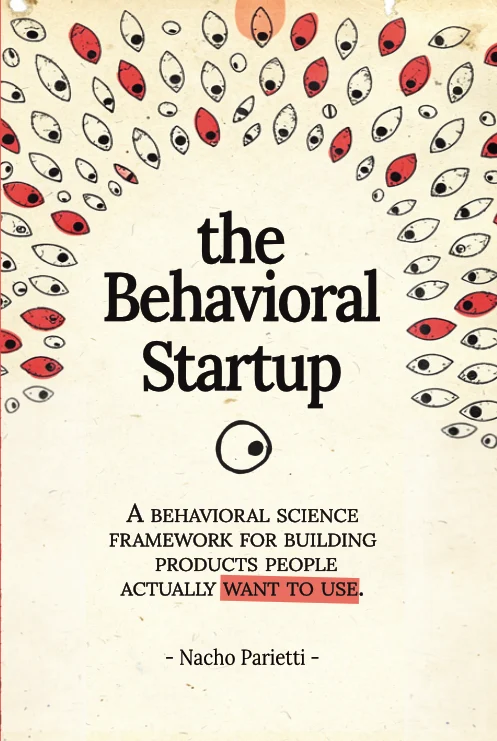
A behavioral science framework for building products people actually want to use.
The Behavioral Startup by Nacho Parietti: a step-by-step behavioral design method for non-technical founders. Learn the ANVERSO models and build products around how people actually behave. 5.0 stars on Amazon.
También en español: La Behavioral Startup, sale el 7 de octubre de 2026.
You know your field. Now you need to know your users.
You're an expert. You know your domain inside and out. But knowing your field and knowing how to build a product people use are two very different skills. The missing piece is rarely more features. It's understanding how people behave.
That is what the ANVERSO models are for: a step-by-step way to go from "I have an insight" to "I have a product people use." No technical background needed, just your expertise and the method.
It's built on how people make decisions in real life, not on how we wish they did.
Rule Zero: Value > Effort
Users adopt a product only when the value they perceive is bigger than the effort it costs them. Every model in the book exists to tip that balance in their favor.
The ANVERSO models
Four models, one after the other. Each one uses what the previous one found, so by the end you know who your product is for, what it promises, how people notice the value, and which behaviors lead there.
A: Actors
Who your product asks for effort, and who gets value.
- Who uses it directly?
- Who pays for it?
- Who decides whether it gets used?
N: Needs
What each actor needs, organized with ERG theory.
- Existence: survival and stability
- Relationship: social connection
- Growth: self-improvement and impact
VE: Value Evident
How people notice that the value arrived.
- If users do not notice the value, it is as if you delivered none
- Design behaviors that make value explicit
- Mind the timing: delayed value feels smaller
RSO: Behavioral funnels
The path from first contact to the behavior you are after.
- Required behaviors that lead to the objective
- Barriers that stop progress
- Features aimed at each specific barrier
How a team applies it: the Behavioral Design Sprint
A collaborative process that brings experts together to work through the ANVERSO models and design products that shape behavior.
- People: A diverse team of experts and stakeholders, with a clear decision maker leading the process.
- Models: The ANVERSO models, used to analyze actors, needs and behavioral barriers systematically.
- Rituals: Structured meetings that keep the team aligned and focused from start to finish.
What readers are saying
5.0 on Amazon · 7 ratings
A super practical, step-by-step approach to building products that people actually want. It gets straight to the point and focuses on what really matters: understanding behavior and turning that into solid product decisions.
An easy and engaging read, both accessible and thought-provoking. (…) This thoughtful balance between clarity and depth makes the book both inspiring and highly practical.
I had the chance to use Nacho's methodology first-hand while designing a health app, and I can say it truly works. It aligns people, knowledge, and purpose, and gives teams a real chance to work together towards something meaningful.
Worth reading if you're tired of workshops that leave you with sticky notes but no clear next steps.
Is your product behaviorally viable?
10 questions, 3 minutes. Find out if your product idea is designed around how people behave. Start the quiz
How it compares to other methods
Most product methodologies assume you have a tech background. This one doesn't. It's built for people who know their domain better than anyone and need a framework to turn that knowledge into a product.
| Feature | Behavioral Startup | Lean Startup | Design Sprints | Design Thinking | MESA | COM-B |
|---|---|---|---|---|---|---|
| Flexible, sustainable pace | Yes (iterative, no crunch) | Yes (continuous cycles) | No (intense 5-day sprint) | No (variable intensity) | No (week minimum) | No (research timeline) |
| Structured problem-solving | Yes (step-by-step models) | No (learn by doing) | Yes (proven process) | No (creative process) | Yes (structured method) | Yes (scientific framework) |
| Built for domain experts | Yes (expert knowledge) | Yes (industry insight) | No (design focus) | No (design focus) | No (process focus) | No (academic focus) |
| Anyone can use it | Yes (domain knowledge only) | No (tech focus) | No (facilitator needed) | Yes (accessible) | No (expert facilitator) | No (behavioral science) |
| Behavioral design approach | Yes (psychology-based) | No (feature focus) | No (solution focus) | No (user focus) | No (problem focus) | Yes (behavior change) |
Start this week
The book walks you through each model with templates, real examples and exercises for your own project. You can start using it the same week you read it.
- Kindle: US$ 4.99. Instant delivery
- Paperback: US$ 19.90. List price. Amazon often discounts it.
Also sold by independent bookstores through IngramSpark. Can't find it? Ask your bookstore to order ISBN 9789915429632.
Frequently asked questions
What is behavioral design for startups?
Behavioral design for startups is applying behavioral science to product development. Instead of building features and hoping people engage, you start by understanding behavior: what motivates users, what stops them and what prompts them to act. Then you design the product around that. The book teaches it through the ANVERSO models.
What is the ANVERSO framework?
A progressive behavioral design framework created by Nacho Parietti: Actors (who invests effort and who gets value), Needs (what each actor needs, using ERG theory), Value Evident (how people notice the value) and the RSO behavioral funnels (the required behaviors that lead to the objective ones). Each model builds on the previous one.
What is Rule Zero?
Rule Zero is the foundation of the method: users must always get more value from a product than the effort it takes to use it. Value > Effort drives every design decision in the book.
What's the difference between behavioral design and UX design?
UX asks "is this easy to use?" Behavioral design asks "does this actually change what people do?" UX focuses on the interface. Behavioral design focuses on the decisions behind it: why people act, what stops them, and how to design for real behavior change.
Do I need behavioral science expertise?
No. The Behavioral Startup was written for people who are not behavioral scientists. If you are a domain expert (a doctor, an educator, an industry specialist) and you want to build a product, it gives you the tools without the academic jargon.
How long does it take to apply?
A full Behavioral Design Sprint takes 2 to 4 weeks for the initial analysis and design. You can start applying the actor and needs models in your first week.
Does it work for B2B products?
Yes, behavioral design works for B2B. Even inside organizations, decisions are made by individual people with real motivations. Map who uses it, who pays and who decides, understand their professional needs, and design for those drivers.
How is it different from Hooked (Nir Eyal)?
Hooked teaches you to build habit-forming products with the Hook Model. The Behavioral Startup covers the whole product design journey: actors, needs, value evident, behavioral funnels, barriers and MVP definition. Habit formation is one part of it.
How is it different from Sprint (Jake Knapp)?
Sprint gives you a 5-day process to prototype and test fast. The Behavioral Startup helps you know what to prototype by understanding behavior first.
How is it different from Lean Startup (Eric Ries)?
Lean Startup validates demand through build, measure, learn. The Behavioral Startup adds the behavioral layer: which behaviors to design for, and why people will adopt the product.
The author: Ignacio "Nacho" Parietti

Nacho is a behavioral designer and programmer based in Montevideo, Uruguay. He got into behavioral design through games, then gambling, then years of consulting. He has worked with dozens of companies and organizations designing products and programs.
He kept seeing the same thing: experts with brilliant insights and no method to turn them into products people use. The Behavioral Startup is that method.
Working on a product or program with your team? See how I work with teams